
Expert Security Solutions by Texas Communication Services
By Raul Escalante, Texas Communication Services
Integrating access control systems with security cameras and alarm systems creates a robust defense mechanism for businesses, promoting enhanced security and operational efficiency. This unified approach allows for real-time monitoring, streamlined operations, and improved incident response. As organizations increasingly adopt integrated security solutions, understanding the mechanisms and benefits of these systems is vital. This article explores the key advantages of integrating access control with security cameras and alarms, the technologies that enable seamless integration, and practical implementation strategies.
Expert Security Solutions by Texas Communication Services
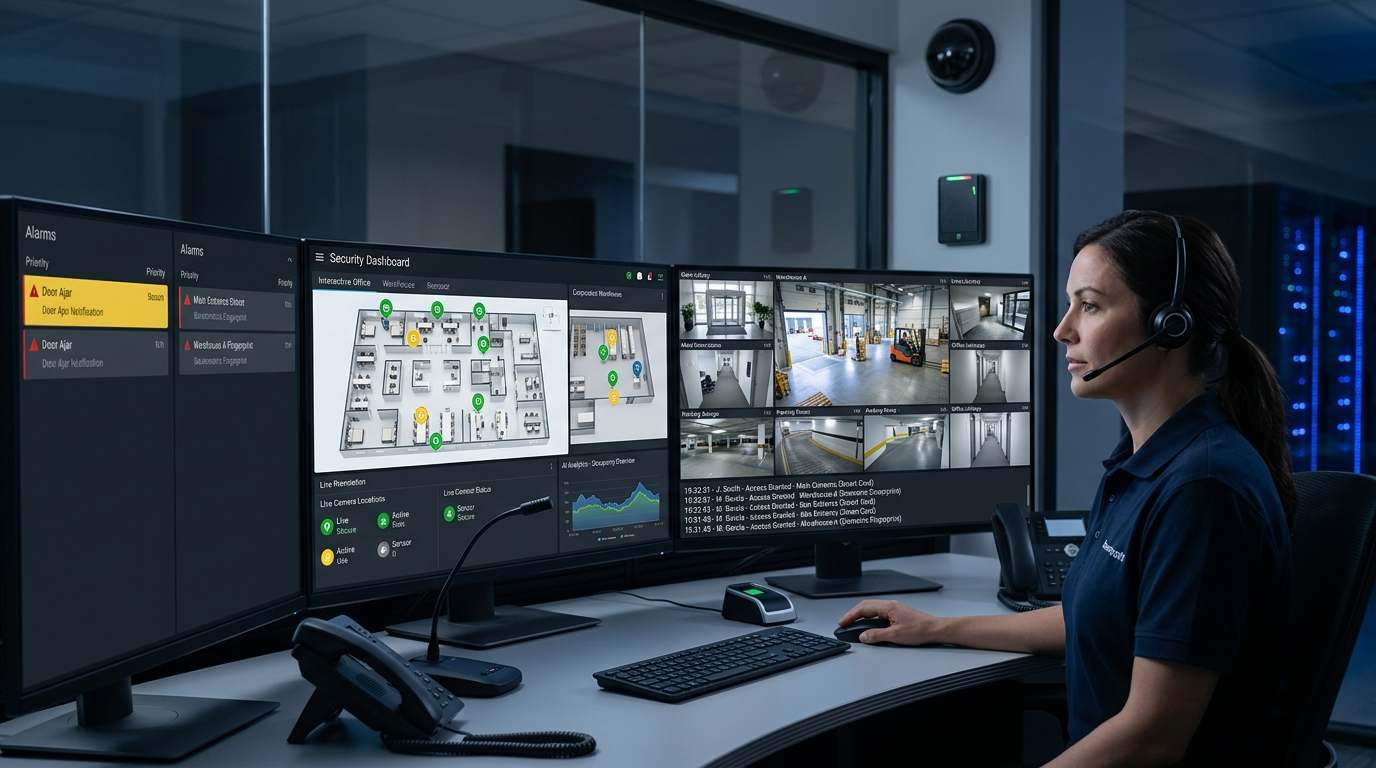
Integrating access control with security cameras and alarm systems provides several significant benefits that enhance the overall security framework for any business. Firstly, this integration allows for enhanced security through real-time monitoring, where footage from cameras can be instantly accessed during alarm activations, improving response times. Secondly, operations are streamlined through centralized management. By managing different security functions from a single platform, businesses can monitor access points, view camera feeds, and receive alerts all in one location. Finally, the integration improves incident response through AI alerts, notifying personnel of potential security breaches and allowing for faster action.
For businesses considering this integration, Texas Communication Services offers comprehensive IT services that can help streamline infrastructure management, making the integration process more seamless.
How Does a Unified Security Platform Enhance Business Safety?
A unified security platform significantly enhances business safety by enabling centralized monitoring and control. This allows security personnel to observe all security activities from one location, reducing the chances of oversight. Additionally, the system provides real-time alerts for unauthorized access, simplifying the detection of potential threats. Moreover, the easy retrieval of footage from integrated systems allows for quick resolution of incidents, providing essential evidence when needed.
What ROI Can Businesses Expect from Security System Integration?
Businesses can expect a remarkable return on investment (ROI) from integrating their security systems. Firstly, there are cost savings from reduced incidents; having an integrated system leads to decreased theft and vandalism. Secondly, operational complexity is reduced, allowing staff to focus on core business functions rather than managing disparate systems. Lastly, efficiency in response times can lead to minimizing damage during security breaches, further promoting financial savings.
To help businesses navigate this integration, Texas Communication Services provides expert insights into maximizing ROI from integrated security systems.
Expert Security Solutions by Texas Communication Services
Several technologies facilitate the seamless integration of access control systems with security cameras and alarms. Most notably, cloud-based security systems allow for flexibility and scalability, enabling businesses to adjust security parameters as needed without significant investments in hardware. Additionally, biometric access control systems can further enhance security by using unique personal identifiers like fingerprints or facial recognition. These advancements not only strengthen security protocols but also enhance user experience by simplifying access processes.
Further research highlights the growing interest in advanced biometric solutions for enhanced security, as traditional methods often fall short in providing active control and real-time response.
Integrated Biometric Access Control for Enhanced Home Security
Conventional home security systems typically depend on mechanical keys and passive CCTV cameras, which do not offer active access control or real-time response. This study presents the design and implementation of an automatic door system that uses iris recognition for authentication, developed with an ESP32-S3 camera and OpenCV, and integrated into a Flutter-based mobile application. The system was created using the Rapid Application Development (RAD) method to ensure flexibility and fast iteration. The prototype includes biometric iris authentication, solenoid-based door locking, live video monitoring, alarm activation, and real-time notifications.Design and construction of an automatic door system based on iris detection using esp32-cam and opencv using the rapid application development (rad) method, 2026
What Communication Protocols Support Access Control and Camera Interoperability?
Communication protocols play a pivotal role in ensuring that access control systems and security cameras can work together effectively. Protocols such as ONVIF (Open Network Video Interface Forum) standardize communication between devices, promoting interoperability. Understanding these protocols is essential for ensuring seamless integration, where devices from different manufacturers can communicate, enhancing overall system functionality.
How Do Cloud-Based Platforms Facilitate Scalable Security System Unification?
Cloud-based platforms offer scalability that is particularly beneficial for businesses seeking to unify their security systems. By leveraging the cloud, organizations can achieve remote access and control over their security infrastructure, making it easier to manage multiple sites. Additionally, centralized data management ensures all security-related information is housed in one location, streamlining data access for analysis and reporting. This seamless integration also supports increased scalability of systems, allowing businesses to add or reduce security measures based on their evolving needs.
How Does Texas Communication Services Support Access Control and Alarm System Integration?
Texas Communication Services specializes in providing IT solutions that support businesses in integrating access control and alarm systems. They offer expert support for system integration, ensuring that various security components work cohesively. Alongside comprehensive IT solutions, they provide tailored service agreements, allowing businesses to customize security implementations that best suit their individual needs.
What IT Infrastructure Management Practices Ensure Reliable Security Integration?
Creating a reliable security integration framework requires adhering to certain IT infrastructure management practices. Key practices include maintaining updated systems to safeguard against vulnerabilities, providing regular training for personnel on security protocols, and implementing best practices in security. These steps help ensure a more effective security strategy that integrates seamlessly with existing infrastructures.
How Does Managed Security from Texas Communication Services Reduce Operational Complexity?
Managed security services from Texas Communication Services significantly reduce operational complexity for businesses. By offering centralized management of security functions, businesses can rely on a single point of contact for all their security needs. This not only simplifies operations but also enhances security with real-time monitoring capabilities and automated alerts for incidents, ensuring prompt responses to potential threats and reducing the burden on in-house personnel.
Which Compliance and Security Standards Impact Access Control and Surveillance Integration?
Compliance and security standards are critical when integrating access control and surveillance systems. Adhering to key regulations in security ensures that systems not only enhance safety but also protect businesses from liability. Organizations must comply with standards that govern data security, privacy, and employee safety to facilitate seamless integration while safeguarding sensitive information.
What Are the Key Security Industry Standards for Integrated Physical Security?
Integrated physical security must align with various industry standards to ensure functionality and reliability. Understanding these standards can be crucial for businesses looking to achieve high-level security protocols. Compliance with these established guidelines helps maintain consistent quality standards across all integrated systems, providing both users and customers with confidence in the operations.
How Are Data Privacy and Alarm Monitoring Managed in Unified Systems?
Data privacy is a vital concern when employing unified security systems. Systems must ensure centralized data management, providing controlled access to protect sensitive information. Access control features can help manage who sees specific data, preventing unauthorized access. Compliance with security standards is essential to maintain privacy throughout different aspects of the integrated security framework.
What Are Real-World Case Studies of Successful Access Control and Camera Integration in Texas SMBs?
Examining real-world case studies of Texas small to medium businesses (SMBs) showcases how unified security platforms significantly improve overall security resilience. These case studies demonstrate a range of improvements including reduced incidents of theft, optimized operational efficiency, and streamlined response methodologies.
How Have Texas SMBs Improved Security with Unified Platforms?
Texas SMBs that have adopted integrated systems report substantial improvements in their security metrics. These enhancements include an overall statistical analysis of security improvements, highlighting the tangible benefits of unified platforms.
What Cost Savings and Downtime Reductions Were Achieved?
One of the most significant benefits sourced from integration is the quantifiable savings from incidents, resulting in reduced operational downtime. These savings not only support better financial health but also contribute to a more responsive security framework capable of adapting to various threats.
How Can Businesses Implement and Monitor Integrated Access Control with Camera and Alarm Systems?
Successfully implementing integrated access control systems requires a structured approach. Businesses should define a clear step-by-step implementation process, focusing on employee training and monitoring best practices. It’s crucial for employees to understand how to work with the technology to achieve optimized security through collaboration among systems.
How Can Centralized Dashboards Improve Security Monitoring and Response?
Centralized dashboards play a significant role in enhancing security monitoring and response. By offering real-time visibility improvements, these dashboards allow security staff to observe operations efficiently and respond promptly when alerts trigger. This integration of communication systems and data accessibility is instrumental in reinforcing a comprehensive security strategy.
The integration of access control systems with security camera and alarm systems presents a transformative opportunity for businesses to enhance their security protocols. By leveraging the appropriate technologies and management practices, organizations can create a unified security environment that offers substantial benefits regarding safety, efficiency, and cost reduction.